Maximizing Small Blocks: Creative Extension Ideas for Terrace Homes
Terrace homes define the Inner West’s architectural character, but their narrow footprints and compact blocks present unique challenges for growing families. Adding living space to these heritage properties requires creative thinking that balances modern needs with heritage considerations and strict council regulations. Many Inner West homeowners assume their small blocks limit
extension possibilities, but innovative design approaches can dramatically increase usable space without requiring large land areas. This guide explores practical extension strategies specifically suited to terrace homes, helping you maximize your property’s potential while respecting its historical context.
Understanding Terrace Home Constraints
Terrace homes in suburbs like Newtown, Marrickville, Leichhardt, and Balmain share common characteristics that both limit and guide extension possibilities. These homes typically sit on blocks measuring just 4 to 6 meters wide and 20 to 40 meters deep, with the original house occupying much of the width. Understanding these constraints helps you develop realistic expectations and focus on solutions that work within your property’s specific limitations.
Heritage overlays affect many Inner West terraces, restricting what modifications you can make to street-facing facades and original structures. Local councils protect the area’s architectural heritage through conservation area controls that require sympathetic design approaches. These regulations typically prohibit changes to front elevations, require matching materials for visible additions, and limit building heights. While these restrictions seem limiting, they actually guide you toward designs that enhance rather than compromise your property’s character and value.
Original terrace layouts create opportunities alongside challenges. Most terraces feature a central corridor with rooms opening on either side, creating a linear layout that can feel dark and disconnected. Original room sizes are often small by modern standards, with ceilings at 9 to 11 feet providing vertical space that extensions can utilize. The rear yard, though small, represents the primary area where most extensions can occur without heritage concerns. Understanding your home’s existing layout helps identify which spaces to preserve and which can be modified or removed.
Site orientation significantly impacts extension design possibilities. Most Inner West terraces face either north-south or east-west, depending on street alignment. North-facing rear yards offer ideal conditions for living spaces that capture winter sun and natural light. East or west-facing yards require more careful design to manage harsh summer sun while maximizing light. South-facing rear yards present the greatest challenges, needing strategic placement of windows, skylights, and courtyards to bring natural light into extended spaces.
Neighboring properties sit extremely close to terrace homes, often sharing walls and having windows that overlook your yard. This proximity creates privacy concerns that must be addressed in extension designs. Council regulations include specific setback requirements and restrictions on windows that might overlook neighboring properties. Balancing your desire for light and outlook with neighbors’ privacy rights requires thoughtful design that considers sightlines and screening options.
Side Return Infill Extensions
Side return spaces represent a unique opportunity specific to some terrace configurations. These narrow passages between your house and the boundary provide just enough width to create slender but valuable extensions that add space and improve connectivity.
Identifying side return potential requires measuring available width. Some terraces have side passages of 1.5 to 2.5 metres created by the building, not extending to the full block width. While narrow, these strips can accommodate extensions that provide extra width to kitchens, create laundries, add bathrooms, or improve circulation. Even a 1.5-metre-wide addition extending 6 to 8 metres provides 9 to 12 square metres of valuable space that can transform your ground floor layout.
Connecting the front to the rear improves circulation and light. Side return extensions often create new pathways through your home, allowing you to move from front to rear without passing through every room. This improved circulation can include hallways, stairs, or simply wider rooms that make the home feel less constrained. Glass roof sections over the side return bring natural light into what would otherwise be a dark passage, benefiting both the extension and adjacent rooms.
Functional spaces suit narrow configurations. While a 1.5-metre-wide room cannot comfortably accommodate living areas, it works perfectly for laundries, pantries, butler’s pantries, powder rooms, or mudrooms. These service spaces rarely need great width, and locating them in side returns frees up more generously proportioned areas for primary living spaces. A side return laundry, for instance, might allow you to expand the kitchen into the area the laundry previously occupied.
Planning controls for side returns requires careful consideration. Councils regulate setbacks from boundaries, typically requiring 900mm to 1200mm clearance for
single-storey buildings. If your side passage provides more width than this setback requirement, you can build to the setback line. For heritage terraces, councils may require that side extensions be set back from the main facade to maintain the original building’s visual dominance from the street.
Costs for side return extensions compare favourably to other addition types. The narrow width means less expensive roofing and a simplified structure, while single-storey construction avoids the complexity of upper levels. Side return extensions might cost $2,500 to $4,000 per square metre, making them an economical way to add useful space. Combined with opening up internal walls, these extensions can transform your ground floor layout for a modest investment.
Outdoor Room Extensions and Conservatories
Creating outdoor rooms and conservatories provides additional living space that connects closely with your garden while working within planning constraints. These semi-outdoor spaces extend your home’s usability and are particularly suited to the Inner West’s mild climate, where outdoor areas see year-round use.
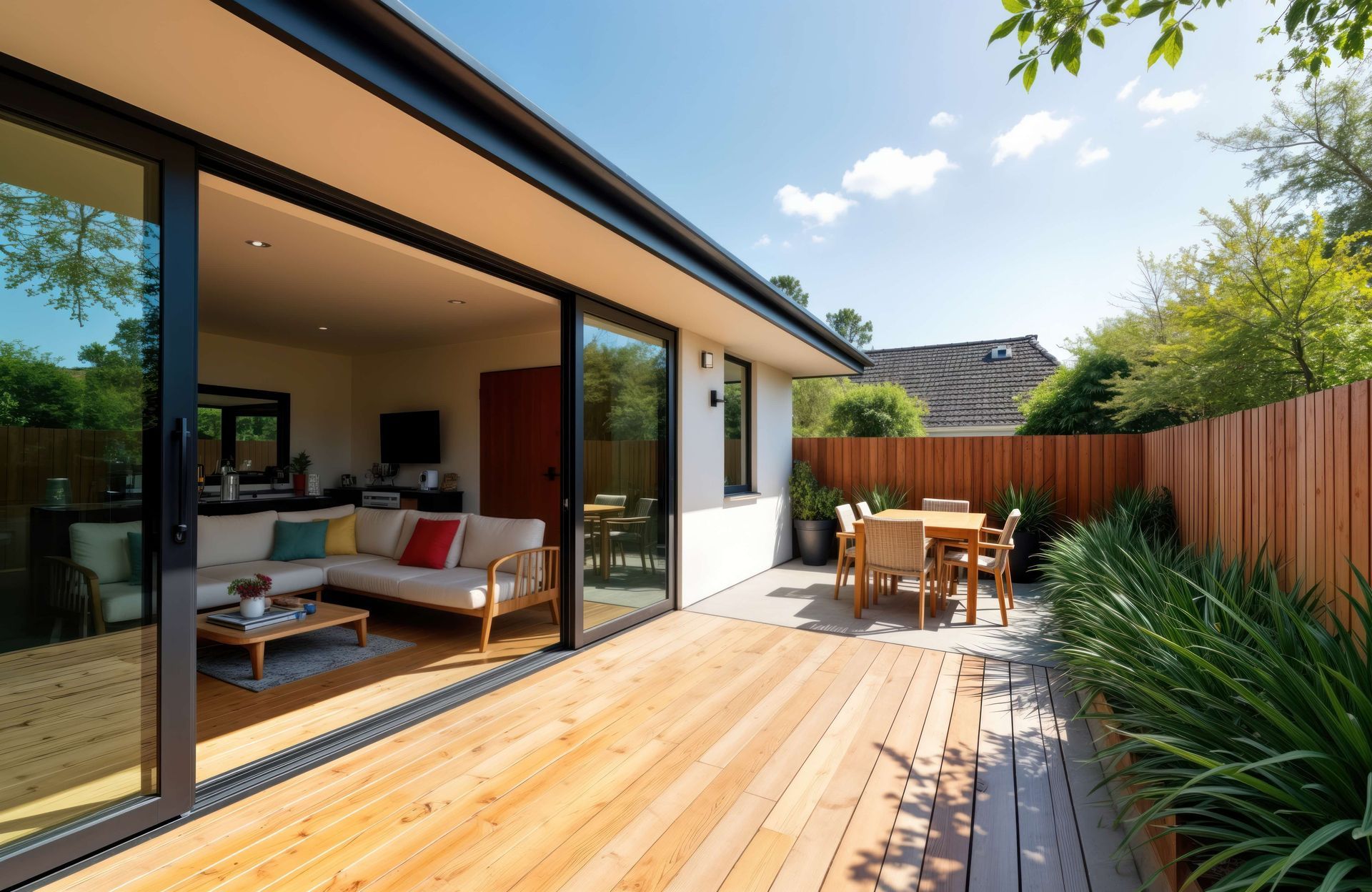
Covered outdoor areas behind rear extensions provide a weather-protected living space. A generously proportioned covered area measuring 3 by 4 metres creates an outdoor dining room that is usable even during rain or intense sun. Incorporating ceiling fans, outdoor heaters, and weatherproof power points enhances functionality. While these spaces do not count as habitable rooms, they function as valuable extensions to your internal living areas during much of the year.
Glazed conservatories create bright transitional spaces between house and garden. Traditional conservatory designs with glass roofs and walls suit terrace gardens beautifully, providing greenhouse-like spaces that are warm and bright. Modern insulated glass options make these spaces more thermally comfortable than older designs that overheated in summer. Conservatories of 15 to 25 square meters can provide dining areas, sitting rooms, or indoor garden spaces that feel like outdoor rooms but offer weather protection.
Retractable roof systems deliver flexibility for year-round use. Modern louvred roof systems with adjustable blades allow you to control sun penetration and ventilation while providing rain protection when closed. Combining these roofs with glazed sliding walls creates spaces that can be completely open in pleasant weather or fully enclosed during extreme conditions. This adaptability makes outdoor rooms genuinely usable throughout all seasons rather than limited to summer months.
Plant integration softens extensions and connects them to gardens. Incorporating planting beds along extension walls, using climbing plants on structures, and integrating greenery into covered areas helps new construction blend with your garden. Vertical gardens on boundary walls bring nature into small yards without consuming floor space. These plantings make extensions feel integrated with outdoor spaces rather than separate additions.
Council approval for outdoor structures involves different considerations than habitable rooms. Covered areas and conservatories typically have simpler approval pathways than fully enclosed living spaces, particularly if they remain under height limits and do not exceed allowable site coverage. However, they still require approval and must comply with setbacks and other controls. Treating outdoor rooms as semi-permanent structures with removable elements can sometimes allow you to proceed under less restrictive rules.
Working with Heritage Controls
Heritage considerations fundamentally shape what extensions you can achieve on Inner West terraces. Understanding heritage principles and working within these constraints leads to designs that enhance both your home’s character and its value.
Identifying your property’s heritage status determines applicable controls. Many Inner West terraces fall within heritage conservation areas, even if not individually listed. These areas have specific development control plans that guide what changes are acceptable. Individually heritage-listed properties face stricter controls requiring consent for most alterations. Checking your property’s heritage status with your local council provides clarity about what restrictions apply before you invest in design work.
Conservation area principles guide acceptable modifications. Generally, councils expect that changes to heritage properties are reversible, do not damage original fabric, distinguish clearly between old and new, and are subordinate to the original building. These principles mean that extensions should be set back from original facades, use different but complementary materials, and avoid overpowering the heritage building. Working with these principles rather than against them leads to successful designs that satisfy councils and create attractive results.
Statement of heritage impact documents support development applications. For properties affected by heritage controls, councils require statements that assess how your proposal impacts heritage significance. These reports, prepared by heritage consultants, analyze your property’s significant features and demonstrate how your design respects these elements. While adding cost to your project, heritage statements actually help by providing professional advocacy for your proposal and addressing council concerns proactively.
Archival recording documents original conditions before alterations. For significant changes to heritage properties, councils may require photographic recording of original conditions. This documentation preserves information about the building’s evolution and creates a historical record. While this requirement seems bureaucratic, it serves important purposes in maintaining knowledge about our architectural heritage and often reveals interesting historical details about your home.
Sympathetic materials and detailing create harmonious results. Using materials that complement original brickwork, choosing window styles that reference but do not copy heritage details, and maintaining similar roof pitches all help new work sit comfortably with old. This approach does not mean slavish copying of original features but rather designing thoughtfully so that additions feel like natural evolutions of the building rather than jarring contrasts.
Conclusion
Terrace homes on small Inner West blocks offer more extension potential than many owners realize when creative design approaches address their unique constraints. Single-story rear extensions remain the most popular and cost-effective solution, opening up ground floors and connecting living spaces with outdoor areas. Two-story additions, basement conversions, and loft transformations provide alternatives that maximize space by building vertically rather than consuming precious yard area. Even without adding square meters, internal reconfiguration can dramatically improve functionality and make homes feel substantially more spacious through better layout and improved light penetration.
Success with terrace extensions requires understanding and working within heritage controls rather than fighting against them. The most successful projects respect the original building’s character while clearly distinguishing new work through contemporary materials and honest design. Strategic use of glazing, skylights, and courtyards overcomes the natural darkness of deep, narrow floor plans, transforming Victorian homes into light-filled modern spaces without compromising their heritage value. Whether you pursue modest improvements or ambitious transformations, careful planning, experienced design professionals, and realistic budgets are essential for creating extensions that enhance both your daily living experience and your property’s long-term value in the competitive Inner West market.
About Inner West Home Extensions
Inner West Home Extensions specializes in transforming terrace homes and period properties throughout Sydney’s Inner West suburbs. With deep experience navigating heritage controls and maximizing small urban sites, their team creates thoughtful extensions that respect architectural character while meeting modern family needs. They manage complete projects from initial design through council approval to construction completion, ensuring seamless coordination and quality outcomes. Their portfolio includes single and two-story additions, internal reconfigurations, and basement conversions across Newtown, Marrickville, Leichhardt, Balmain, and surrounding areas. Inner West Home Extensions combines architectural expertise with practical building knowledge to deliver extensions that enhance both livability and property value.
More Home Addition & Renovation Articles
Inner West Home Extension | Blogs